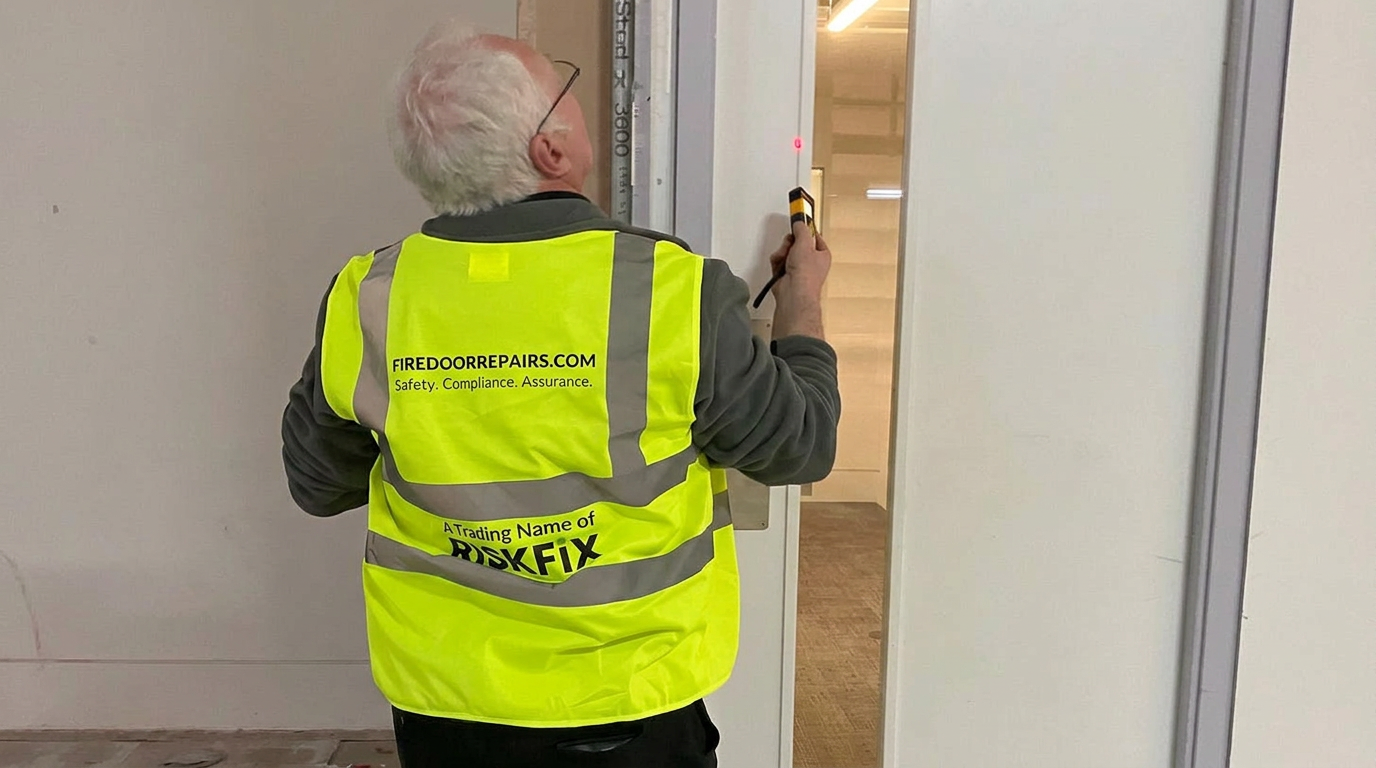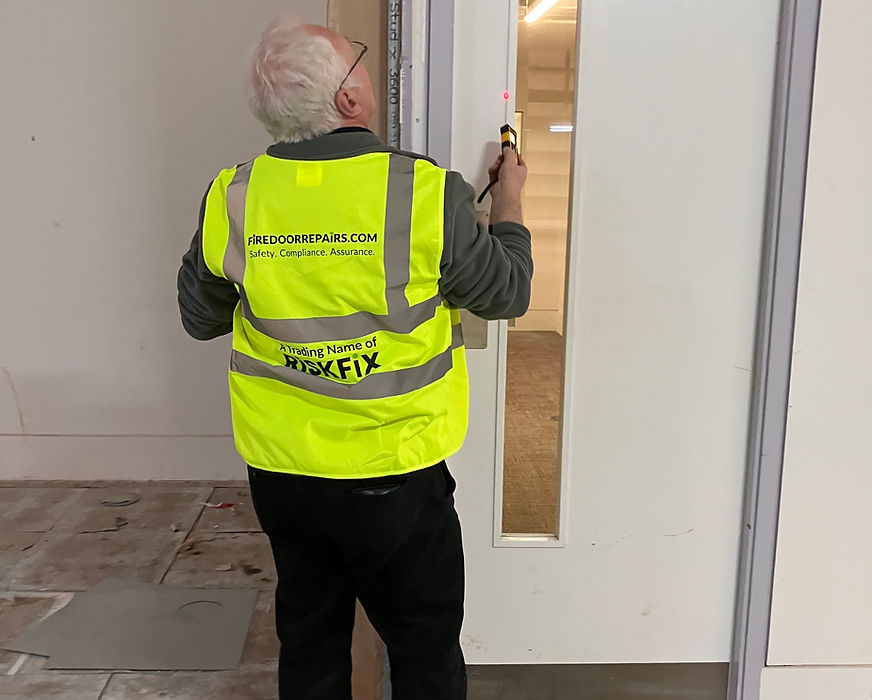
What does a fire door inspection include?
Every inspection assesses the complete doorset, not just the leaf: frame fixings, gaps and clearances, intumescent strips and cold smoke seals, hinges, self-closing devices, glazing, signage and the certification label.
Findings are documented door-by-door with photographs, a condition rating and plain-English guidance on what passes, what fails and what to prioritise — referenced to BS 8214:2026 and Approved Document B.
How often must fire doors be inspected?
Under the Fire Safety (England) Regulations 2022, communal fire doors in residential buildings over 11 metres must be checked at least quarterly, and flat entrance doors at least annually.
For commercial premises, schools and care homes, inspection frequency is set by your fire risk assessment — but a documented annual inspection is the practical minimum for most buildings.
Who is responsible for fire door inspections?
The Responsible Person defined by the Regulatory Reform (Fire Safety) Order 2005 — typically the building owner, landlord, managing agent or employer — must ensure fire doors are inspected and maintained.
We work directly for social housing providers, managing agents, care homes and commercial clients across Suffolk, providing the independent evidence that duty requires.
Why choose an independent inspector?
Because we inspect and scope works rather than sell doorsets, our reports are impartial: we will not recommend a replacement where a compliant repair will restore performance.
That independence, combined with verified competency, is exactly what insurers, the Building Safety Regulator and enforcing authorities expect to see.
Key terms explained
- FD30 / FD60
- A fire door offering 30 or 60 minutes of fire resistance when correctly installed and maintained.
- Intumescent strip
- A seal that expands under heat to close the gap between door and frame, blocking flame spread.
- Cold smoke seal
- A brush or fin seal that resists the passage of cold smoke at ambient temperature.
- Responsible Person
- The duty-holder under the Fire Safety Order 2005 accountable for fire safety in a building.